In 2026, Supercars teams once again honour the official Indigenous Round with bold liveries inspired by original artworks from Indigenous artists.
Each design is a powerful expression of culture, Country and storytelling, bringing Indigenous voices and perspectives to the track as the Supercars roar around Hidden Valley.
Discover the stories behind these striking designs and the artists who brought them to life.
Blanchard Racing Team
Drivers
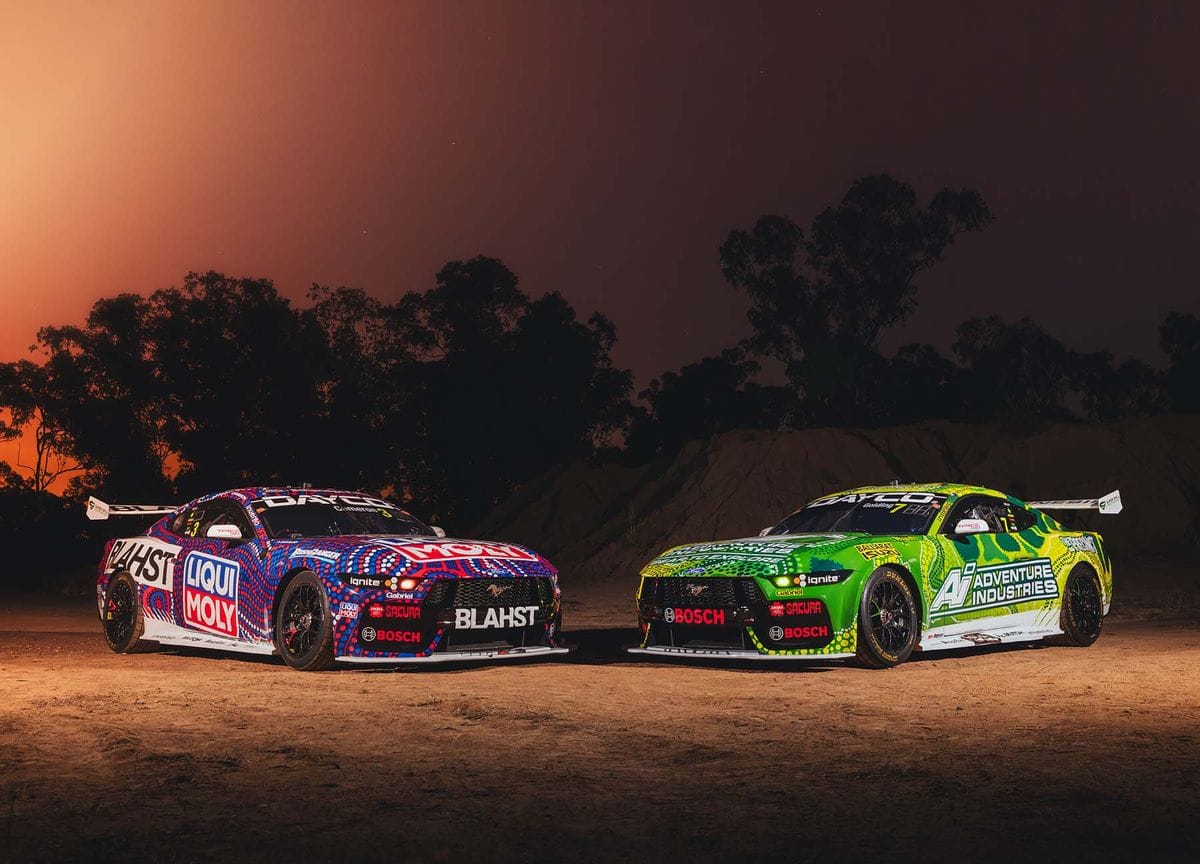
AARON CAMERON #3, Ford Mustang GT
Artist - Azariyah Lansom
James Golding #7, Ford Mustang GT
Artist - Kris Kennedy
AARON CAMERON #3, Ford Mustang GT
Blanchard Racing Team's car #3 features a striking livery created by Year 11 student and emerging artist Azariyah Lansom.
Living on Wiradjuri Country, Azariyah has been learning about culture from a young age, drawing inspiration from these teachings through her creative expression. Art is a passion she uses to explore ideas, tell stories and maintain a strong connection to culture.
Titled Tracks That Bring Us Together, the artwork reflects the shared journey that connects people, communities and cultures. At its heart sits a central meeting place - a powerful symbol of where journeys converge and stories are shared.
Flowing across the design are tracks representing individual paths and experiences. Much like racing lines on a circuit, each track carries its own story, travelling from different directions toward a common destination. The smaller circles throughout the artwork represent pit stops and gathering places, where people pause, connect and support one another before continuing their journey.
The artwork captures the spirit of motorsport, where competitors from different backgrounds come together on the same track. Surrounding the design, dots represent the many people who make that journey possible — crews, families and communities, past, present and future.
Through the design Azariyah celebrates the idea that while every journey is unique, we are all connected through shared experiences, moving forward together - following our own tracks, but sharing the same road.
James Golding #7, Ford Mustang GT
James Golding’s Ford Mustang GT is emblazoned with a distinctive artwork by artist Kris Kennedy, a proud Gamilaraay/Yuwaalaraay man from Walgett who now lives and creates on Wiradjuri Country in Bathurst.
Kris's connection to culture began at an early age through dance and by watching his mother, Mary, paint. These experiences helped shape a lifelong appreciation for storytelling, identity and cultural expression – influences that continue to underpin his work today.
Titled Williwaalingaa Baldya Yirambang, the artwork draws inspiration from the ancient landscapes stretching from The Rocks to Hill End, with a particular focus on Billywillinga and The Bridle Track on Wiradjuri Country.
The design captures a landscape shaped by rugged mountains, rocky escarpments and waterholes, with winding pathways weaving through the terrain. Rich in bush tucker and home to abundant wildlife, the artwork celebrates the beauty and significance of Country, reflecting a place that has sustained and connected people for generations.
Kris’ distinctive style transforms the car into a moving canvas reflects a deep respect for culture and Country, brought to life through intricate patterns, movement and symbolism.
Grove Racing
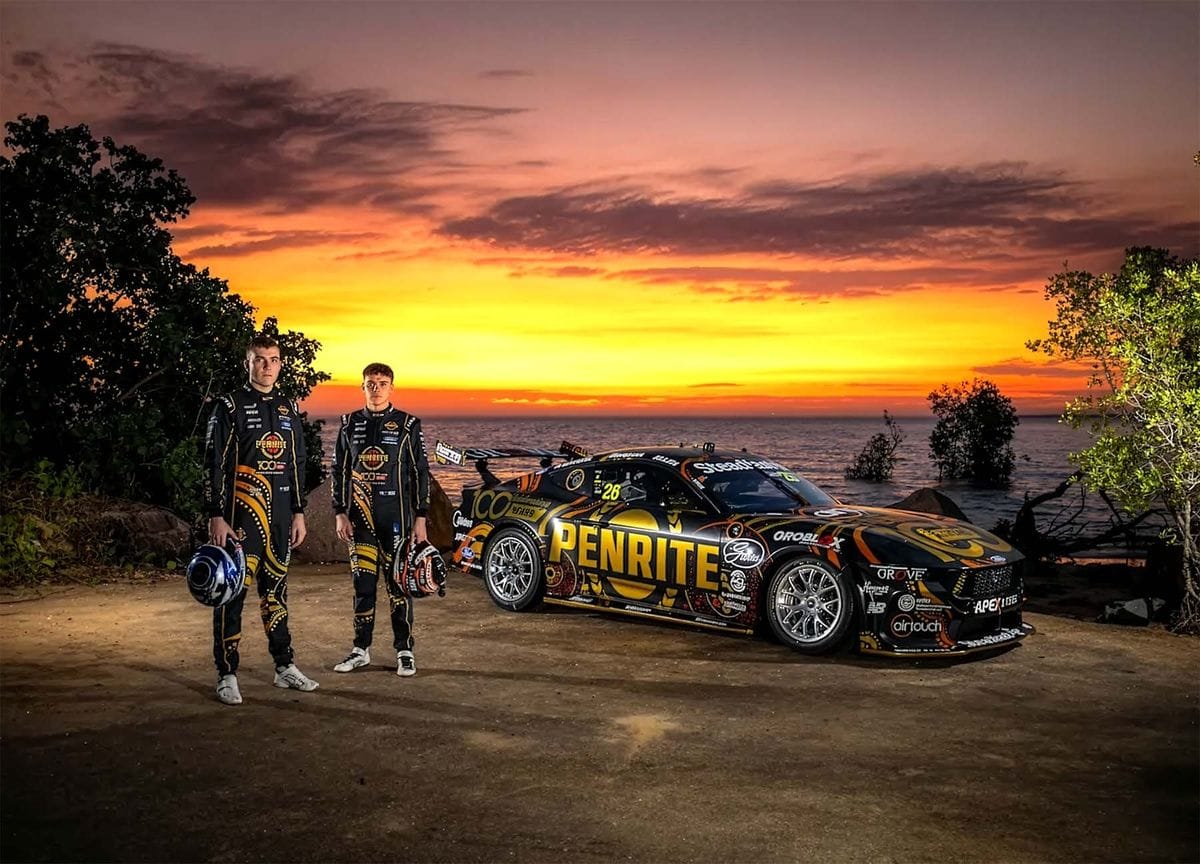
DRIVERS - Matt Payne #19 and Kai Allen #26, ford mustang GT
Artist - Tenielle McGuire
Created by young Miriwoong and Palyku artist Tenielle McGuire, Penrite Racing’s livery design explores connection, movement and the enduring strength of culture.
At the centre of the design is a meeting place representing younger generations of Indigenous people, surrounded by rings symbolising connection to culture. Within these rings are the tracks of goanna, emu, dingo and people, reflecting the shared journeys of all living beings. Just as race cars follow their own paths around a circuit, the artwork recognises the journeys, cycles and connections that have existed across Country for thousands of years.
Flowing from the centre are river-like lines that extend beyond the canvas, symbolising the continuation of knowledge and the passing of culture from one generation to the next. The overall shape of the artwork creates a sense of movement, as though it has been shaped by speed and wind, mirroring the motion of the race car itself.
For Tenielle, this movement also speaks to the adaptability and resilience of Indigenous peoples throughout history. The wind represents the hardships endured, while the artwork as a whole reflects the strength of culture that continues to endure and evolve.
The design is completed with a palette inspired by the tones of fire, symbolising the deep history, knowledge and stories that have been carried through generations and continue to be shared today.
team 18
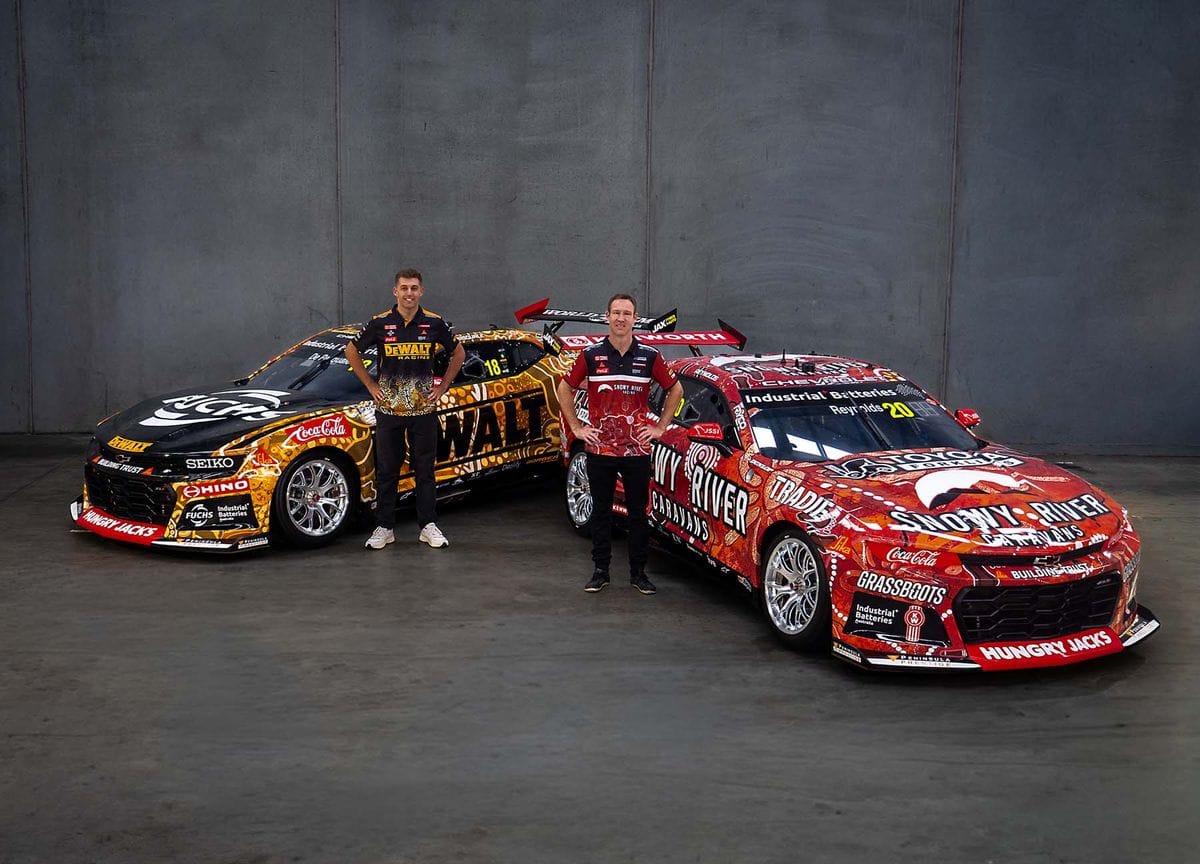
DRIVERS - Anton De Pasquale #18 and David Reynolds #20, Chevrolet Camaro ZL1
artist - Presten Warren
For Team 18's liveries this year, Aboriginal artist Presten Warren has created two distinct artworks that celebrate connection to Country, culture and community.
Based in Port Lincoln, South Australia, Presten is a proud Wirangu, Dieri, Kokatha, Mirning and Arabana man. As a descendant of both desert and ocean tribes, he sees art as a way of carrying forward a storytelling tradition that stretches back more than 65,000 years, while maintaining a strong connection to Country, family and identity.
Featured on Car 20, Camping Under the Stars captures the experience of gathering on Country beneath the night sky. Meeting places, tracks and journey lines weave throughout the artwork, symbolising connection, movement and shared stories. Warm earthy tones reflect firelight, red dirt and the peaceful feeling of spending time outdoors, creating a tribute to togetherness and the beauty of slowing down on Country.
In contrast, the yellow Thriving on Country artwork featured on Car 18 explores the powerful emotions that come with reconnecting to homeland. The piece reflects the importance of nurturing and protecting the environment, recognising the deep relationship between people and Country and the responsibility to ensure it continues to thrive for future generations.
Together, the two designs showcase different expressions of connection to Country, highlighting both the shared experiences that bring people together and the enduring importance of caring for the places that shape identity and belonging.
WALKINSHAW ANDRETTI UNITED
Drivers - CHAZ MOSTERT #1 and RYAN WOOD #2, Toyota GR Supra
Artists - Monica Taylor and Petera Te Hiwirori Hatea
CHAZ MOSTERT #1, Toyota GR Supra
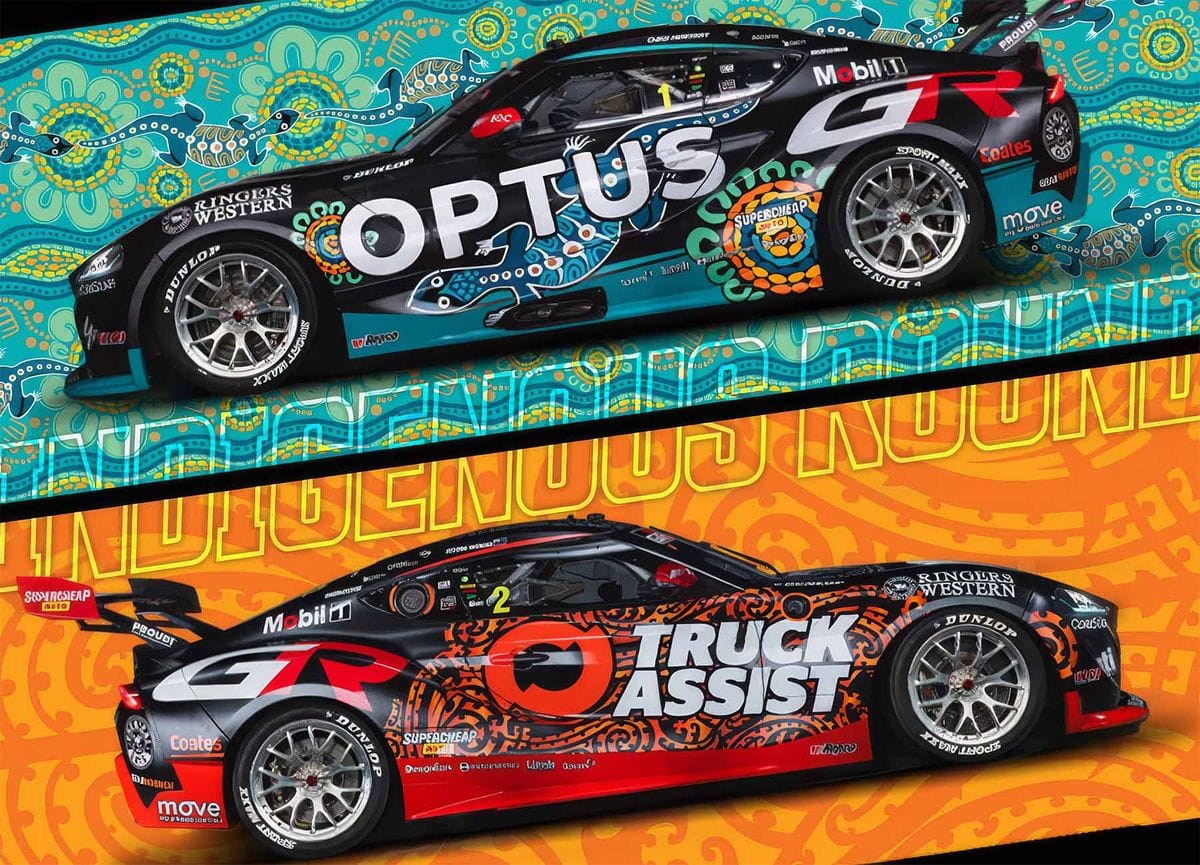
Speed, teamwork and connection are at the heart of the Indigenous Round livery featured on Walkinshaw TWG Racing's Mobil 1 Optus Racing car.
Created by Badimia Yamatji artist Monica Taylor, the artwork centres on the Bungarra (goanna), an animal of great cultural significance to many Indigenous Australians. For generations, goannas have played an important role as a food source and feature prominently in cultural practices, stories and traditions. Known for their speed and agility, the goanna was chosen to represent the team's Supercars campaign.
The artwork tells the story of family groups tracking goannas across Country, following their footprints through the sand to their burrows. Once found, the catch would be shared amongst family and community, reflecting the importance of working together and supporting one another.
Throughout the design, Monica draws parallels between traditional hunting groups and a modern race team. Just as a successful hunt relies on trust, communication and every person playing their role, success in motorsport depends on the collective efforts of drivers, engineers, mechanics and crew members working towards a common goal.
The sleek and fast-moving goannas featured throughout the artwork also serve as a symbol of the Supercars themselves, creating a powerful connection between culture, Country and competition on the racetrack.
RYAN WOOD #2, Toyota GR Supra
For the Supercars Indigenous Round, Walkinshaw TWG Racing's No. 2 car carries a design that celebrates driver Ryan Wood's deep connection to his Māori heritage.
The artwork was created by renowned Māori artist Petera Te Hiwirori Hatea, an accomplished visual artist, musician and cultural performer from Aotearoa, New Zealand. With a career spanning decades and works exhibited both nationally and internationally, Hatea is known for creating pieces that honour culture, identity and storytelling.
At the centre of the design is the Mangōpare, the hammerhead shark, a powerful symbol of strength, resilience, guidance and protection. Inspired by the whakataukī "Kei mate wheke, kia mate ururoa", meaning "do not die like an octopus, die fighting like a hammerhead shark", the artwork reflects the determination and courage required both on and off the racetrack.
Flowing throughout the design are Pitau a Manaia patterns, representing the unwavering support of Ryan's family, friends, team and partners. These connections form the foundation of his journey, providing strength through new experiences, growth and opportunity.
Together, the artwork celebrates Ryan's pride in his Māori identity and the people who support him along the way, carrying his culture, values and mana wherever his racing career takes him.
Erebus Motorsport
drivers - Jobe Stewart #9 and cooper murray #99, Chevrolet Camaro ZL1
artist - Jedess Hudson
Jobe Stewart #9, Chevrolet Camaro ZL1
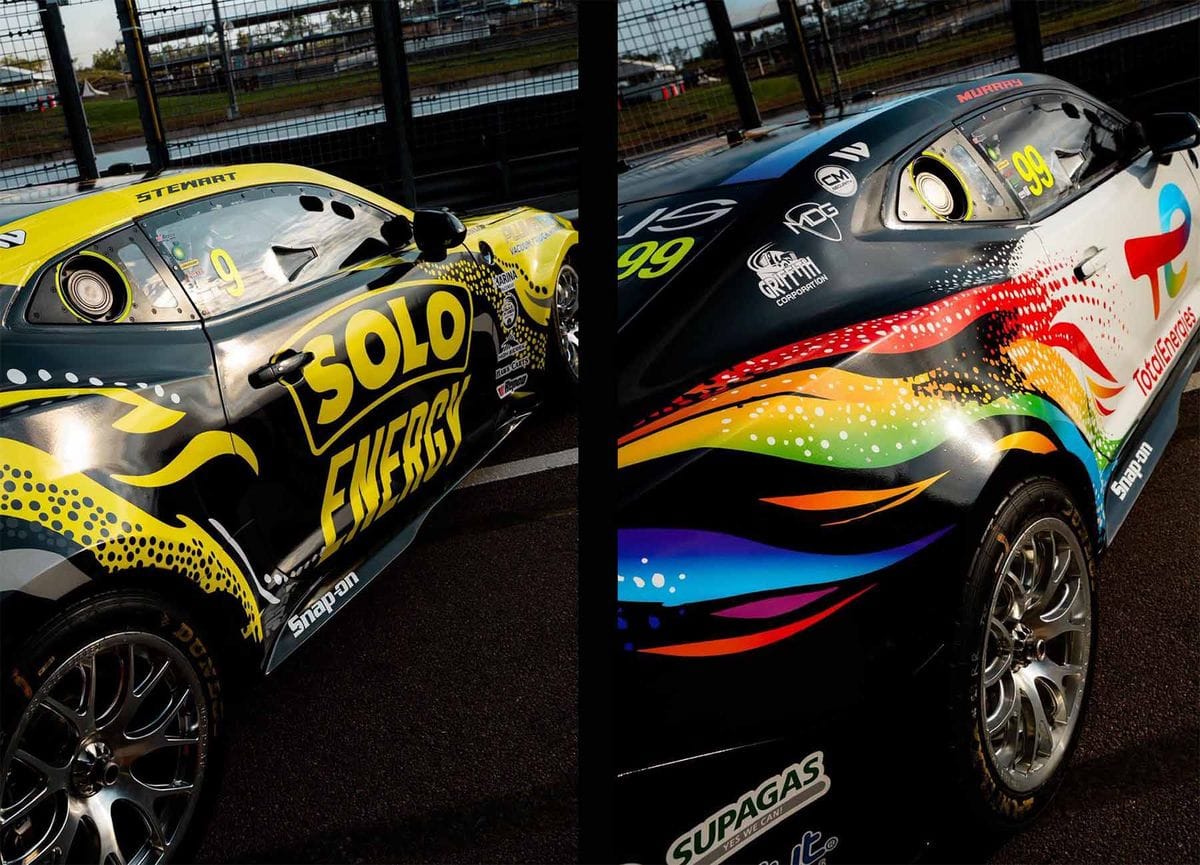
Continuing her collaboration with Erebus Motorsport for a third year, Jedess Hudson has created Currents of Energy for Jobe Stewart’s #9 Chevrolet Camaro, celebrating the connections that keep Australians moving.
The design explores themes of movement, connection and shared progress, with sweeping lines symbolising the roads, stories and communities that link Australians from place to place. A vibrant yellow palette reflects the optimism, resilience and unmistakable energy of Solo, while black and white elements remain true to Erebus Motorsport's racing identity. Layered greys throughout the livery represent strength and balance.
Dotted pathways weave across the design, echoing the constant movement of people, ideas and fuel across the country. The artwork also acknowledges partners including Solo Energy and 7-Eleven, whose role in keeping Australians moving is reflected within the story of the livery.
Through Currents of Energy, Jedess captures the spirit of shared journeys and collective progress, and the power of connection.
Cooper Murray #99, Chevrolet Camaro ZL1
Erebus Motorsport's Chevrolet Camaro (#99) showcases Energy in Motion, a meaningful design created by artist Jedess Hudson.
A proud descendant of the Ewamian and Western Yalanji people of North Queensland, Jedess is known for creating artworks that reflect a deep connection to Country - drawing inspiration from the landscapes, waterways, flora, fauna and seasonal rhythms of her traditional homelands.
Jedess’s work has become a powerful vehicle for sharing culture and storytelling, and she has previously designed Indigenous Round liveries for Brad Jones Racing, Tickford Racing and Erebus Motorsport (now for the third time), continuing to bring First Nations stories to a national audience.
Energy in Motion celebrates movement, unity and the invisible forces that connect people across Country. Inspired by flowing landscapes, waterways and travelling paths, the sweeping waves throughout the design represent the constant movement of communities, stories and journeys that weave across Australia.
The livery's vibrant colours draw inspiration from TotalEnergies' bold identity, symbolising diversity, innovation and shared progress, while the black elements remain true to Erebus Motorsport's unmistakable racing DNA. Intricate dotted patterns are woven throughout the design, representing connection and the passing of knowledge between generations.
The artwork reflects the power of coming together: on the road, within communities and on the racetrack.
Shell V-Power Racing
Drivers - Brodie Kostecki #17 and Rylan Gray #38, Ford Mustang GT
artist - Billy-Jay O’Toole
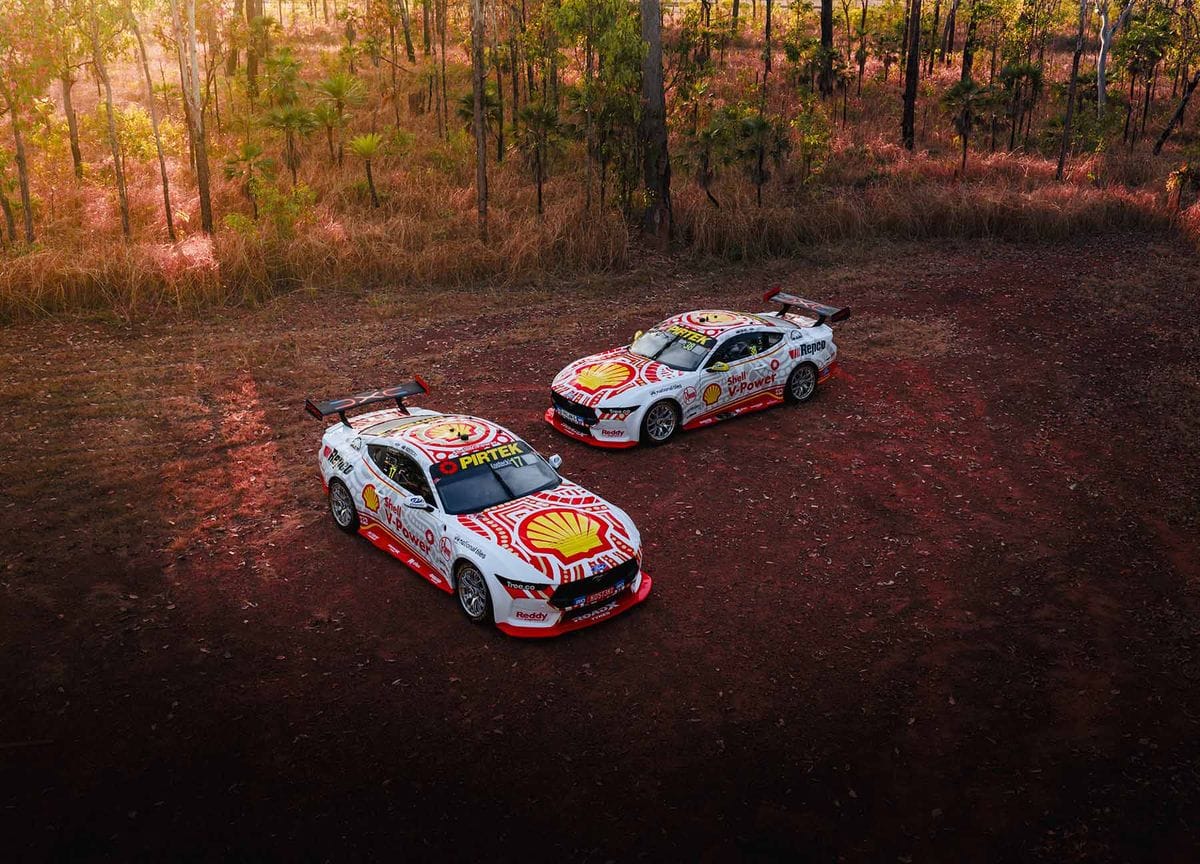
The design on the Shell V-Power Racing Team cars is created by proud Wadawurrung artist Billy-Jay O'Toole. His artwork, Gathering, is a powerful reflection on place, community and the enduring strength of culture.
Growing up on Wadawurrung Country in Coriyu (now known as Corio), Billy-Jay was aware of the area's significance and its history. For countless generations, Corio was a place of abundance where Wadawurrung people lived, gathered and sustained life. Following colonisation, Wadawurrung people were prevented from living on and accessing resources from the region. Today, the area is once again home to Wadawurrung people alongside many other community families, serving as a place of belonging, education, sport and connection.
The artwork celebrates the importance of bringing people together, drawing a parallel between community gathering places and the Supercars Indigenous Round in Darwin. Just as communities come together to share stories, culture and experiences, the event provides an opportunity to honour and celebrate the world's oldest living culture on a national stage.
At the heart of the piece is a message of unity, learning and shared respect. As the sun rises and the event begins, the artwork encourages people to rise, learn, grow, achieve and inspire, while embracing and celebrating First Nations culture.
Through Gathering, Billy-Jay shares a simple but powerful invitation: Koling wada ngal — let us walk together.
Red Bull Ampol Racing
Drivers - Will Brown #888 and Brock Feeney #88, Ford Mustang GT
artists - Clontarf Foundation, Wyong Academy Students
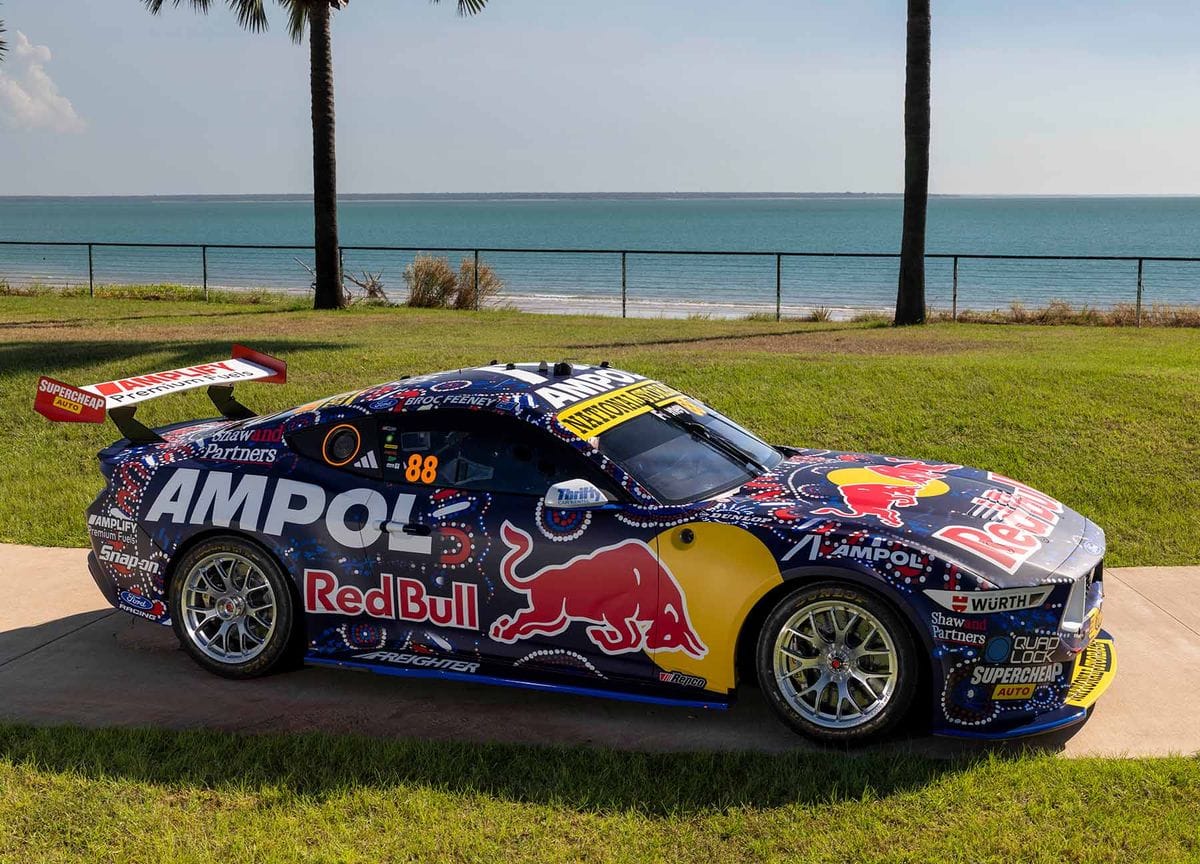
Created by students from the Clontarf Foundation's Wyong and Tumbi Umbi Academies on the NSW Central Coast, this year's Red Bull Ampol Racing Indigenous Round livery is a celebration of culture, connection and shared journeys.
The design centres on the Darwin racetrack, representing the Darkinjung people's connection to their whale totem - a sacred symbol of strength, guidance and resilience. Positioned at the heart of the artwork, the whale acts as an anchor, connecting land and water while guiding the viewer through the story of the Indigenous Round.
Tracks extend across the design, tracing the Supercars calendar and connecting race destinations around Australia. Vibrant rivers weave throughout the artwork, symbolising the lifeblood of the land and the pathways that link communities together. Native animal tracks, including kangaroo, emu and possum, acknowledge the animals that have moved across these landscapes for generations.
Human figures scattered throughout the piece represent the fans and communities who gather at each event, recognising that motorsport is about more than racing alone. Through culture, storytelling and shared experiences, the artwork celebrates the connections formed on and off the track, bringing people together through sport, community and respect.
The result is a vibrant and meaningful tribute to unity, resilience and the enduring strength of Aboriginal culture.
As part of their successful artwork submission, the students will travel to Darwin to experience the Supercars Indigenous Round firsthand, joining the Red Bull Ampol Racing team across the race weekend and seeing their artwork brought to life on the national stage.
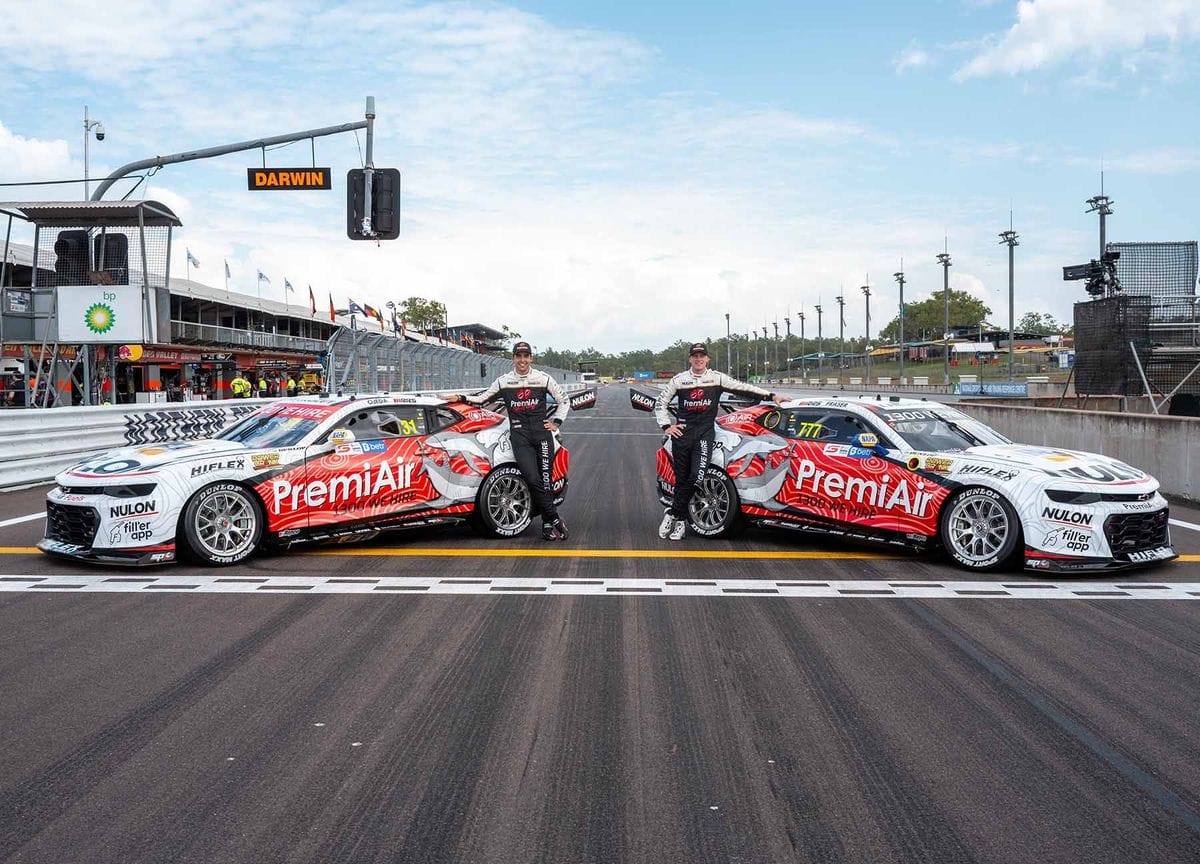
PremiAir Racing
Drivers - Jayden Ojeda #31 and Declan Fraser #777
Chevrolet Camaro ZL1
artist - Telisa (Tilly) Palmer
Telisa (Tilly) Palmer is a 15-year-old student at Worawa Aboriginal College. An Arrernte woman from Mparntwe (Alice Springs), Tilly currently lives in Garramilla (Darwin).
Tilly has a deep fascination with sharks and the ocean. Her passion for marine biology and curiosity about the underwater world inspired the artwork that features on PremiAir Racing's Indigenous Round livery, and celebrates her love of sharks and the power of the ocean.
Tilly explains that sharks are apex predators admired for their strength, protection and sharp instincts. Having survived and adapted for thousands of years, they embody resilience, courage and an enduring ability to thrive in challenging environments.
Flowing throughout the artwork are lines that represent the ocean and its currents, capturing the movement, energy and strength of the water. The shark and the ocean are depicted in harmony, each supporting and connecting with the other. As the patterns sweep across the car, they evoke the image of a shark gliding through the water, bringing a powerful sense of motion, speed and determination to the livery.
“The movement of a supercar on the race track reminds me of a shark swimming through the ocean - together they exist and move in strength, power and speed.”
The design is further brought to life through a unique interpretation of PremiAir Racing's Arrow logos, reimagined as two circling sharks. Together with Tilly's artwork, these elements create a bold and dynamic visual identity that reflects her passion for the ocean and the creatures that inspire her.
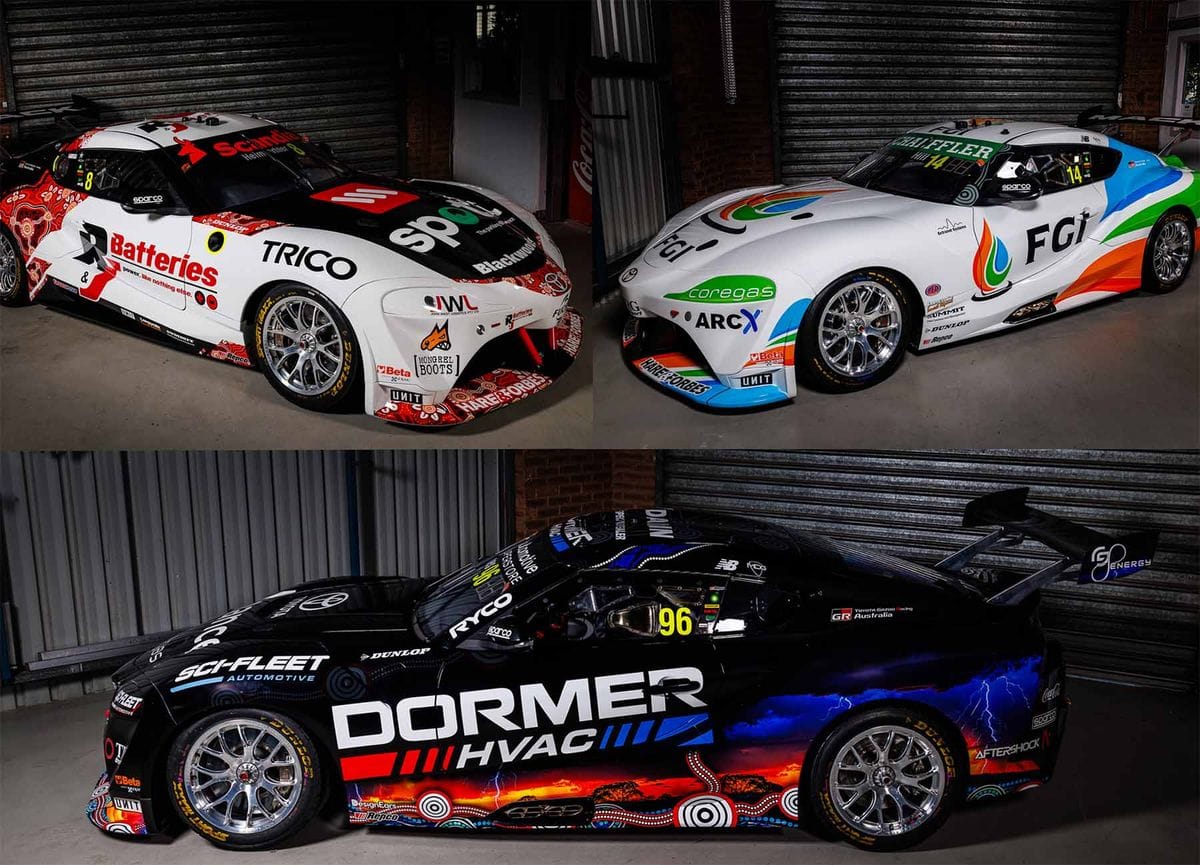
Brad Jones Racing
driver - Andre Heimgartner #8, Cameron Hill #14 and Macauley Jones #96
Toyota GR Supra
artist - Mungabareena Aboriginal Corporation
More than an artwork, the Brad Jones Racing Indigenous Round livery tells the story of the Mungabareena Aboriginal Corporation (MAC) and the community it has supported for more than 30 years.
Members and employees of MAC collaborated to create a collection of individual pieces that reflect the organisation's history, growth and ongoing impact throughout the Albury-Wodonga region. At its heart is the story of the four sisters who founded the organisation, beginning with conversations around a kitchen table and a shared vision to empower and uplift their community.
Today, MAC is a proud and culturally centred organisation delivering a broad range of programs and services that strengthen community, create opportunities and foster connection to culture. The artwork celebrates this journey, from humble beginnings to an organisation that continues to make a lasting difference across the region.
Having partnered with Brad Jones Racing for several years, this year's livery continues a strong and meaningful relationship, providing an opportunity to share MAC's story with audiences across Australia.
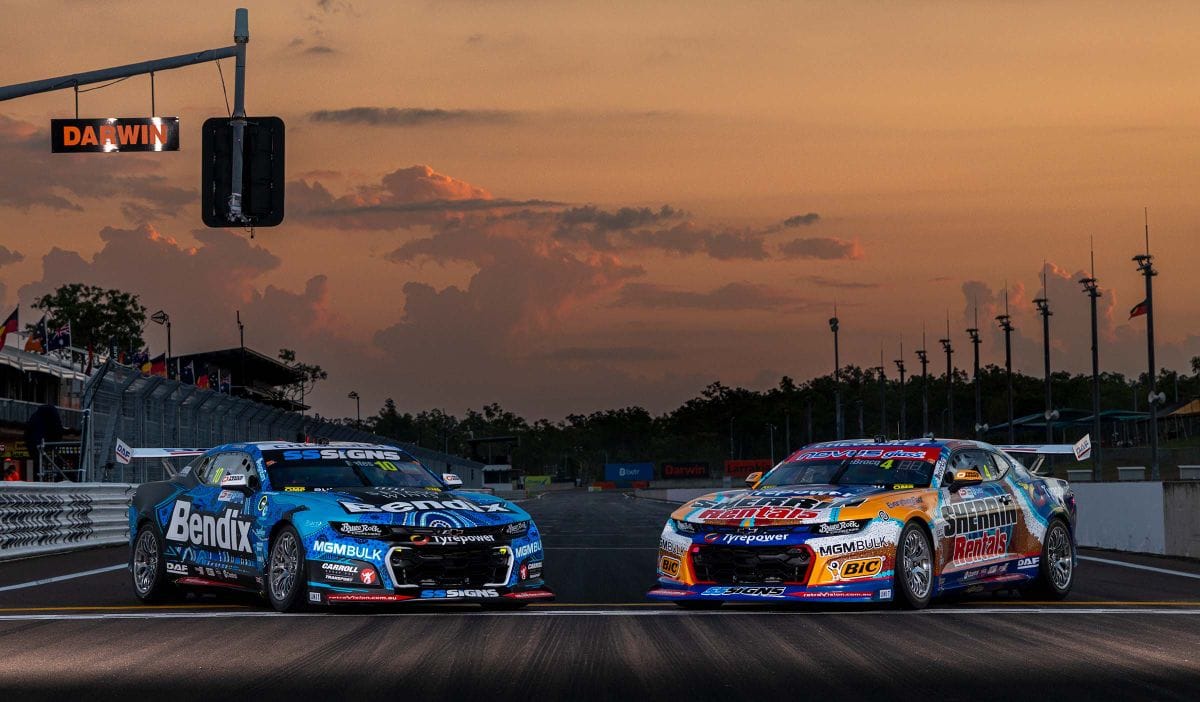
Matt Stone Racing
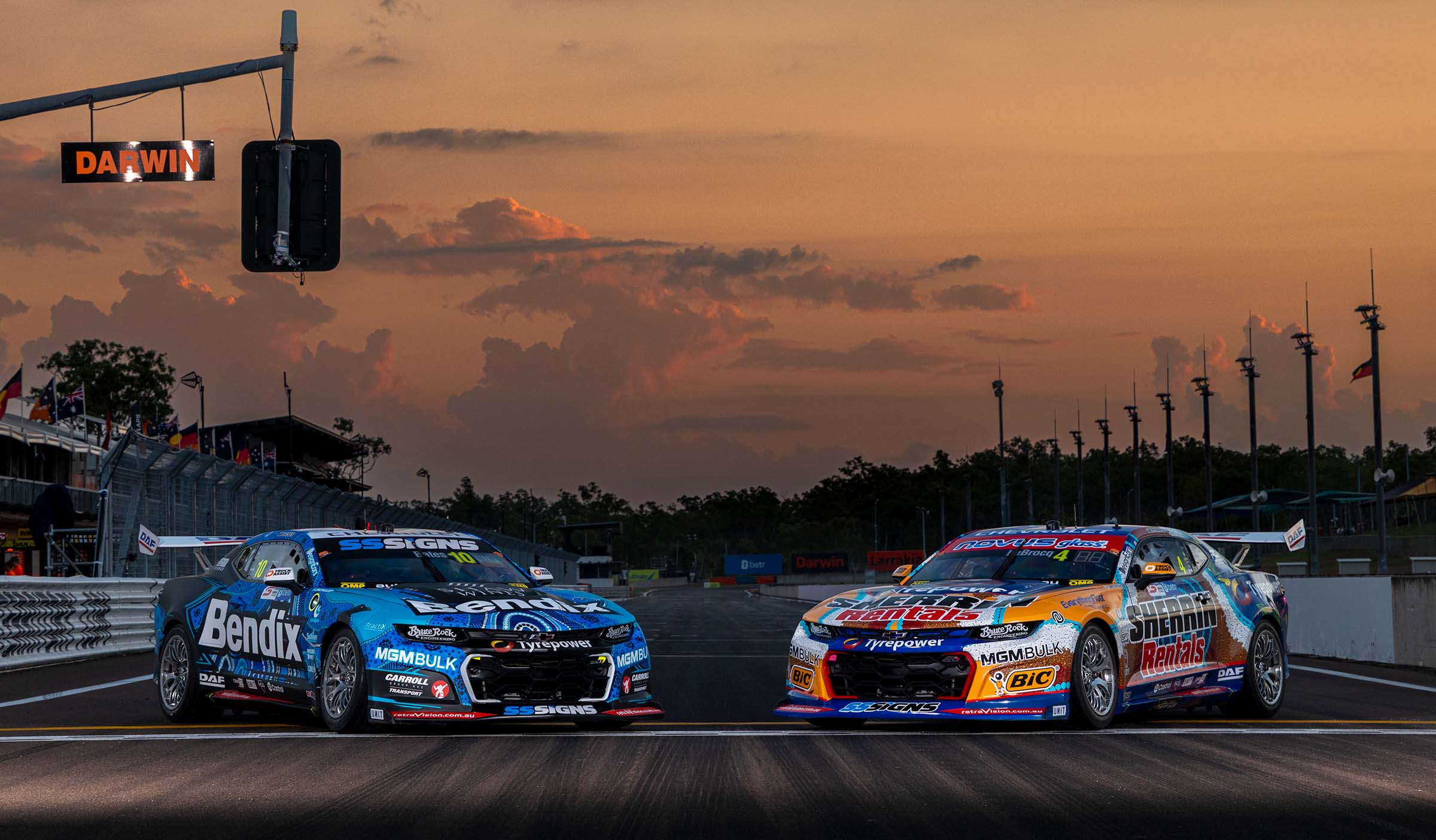
drivers - Jack Le Brocq #4 and Zach Bates #10, Chevrolet Camaro ZL1
artist - Billy-Jay (BJ) O’Toole
Jack Le Brocq #4, Chevrolet Camaro ZL1
Connection, welcome and shared experience sit at the heart of the Indigenous Round livery created by proud Wadawurrung artist Billy-Jay (BJ) O'Toole for Matt Stone Racing's Sherrin Rentals Camaro.
Born and raised on Wadawurrung Country in Victoria, BJ’s artwork is deeply influenced by Country, culture and storytelling. His contemporary style draws on the landscapes, waterways and traditions that continue to shape Wadawurrung identity today.
This design celebrates the coming together of people from across Australia and around the world for the Supercars Indigenous Round in Darwin. Flowing throughout the artwork are representations of waterways, coastline and ochre Country, while Bunjil, the creator spirit, watches over the landscape and guides visitors as they journey across Country.
Footprints throughout the design acknowledge the many people travelling to the event, while meeting places represent the teams, communities and individuals who gather as part of the Supercars family. Eucalyptus leaves symbolise welcome and serve as a reminder to tread respectfully while visiting Country.
The artwork also honours ancestors who have passed into the Dreaming, represented by yellow dots woven throughout the design. Together, these elements carry a simple but powerful message: Koling wada ngal. Let us walk together.
Zach Bates #10, Chevrolet Camaro ZL1
For Matt Stone Racing's Bendix Racing Camaro, Billy-Jay (BJ) O'Toole has created a design that celebrates the stories, landscapes and cultural significance of Wadawurrung Country.
A proud Wadawurrung man and recognised Traditional Owner, Billy-Jay's work is grounded in a strong connection to Country. Through contemporary Indigenous art, he shares stories that honour the land, waterways, wildlife and cultural traditions that have shaped his people for countless generations.
The artwork for Zach Bates’ car #10 features symbols representing the hills, mountains and waterways that are significant across Wadawurrung Country, alongside traditional cross-hatching that acknowledges the Country on which these stories belong. Eucalyptus leaves are woven throughout the design, symbolising welcome and cleansing as Bendix continues its journey around Australia through Supercars competition.
Four important birds also feature within the artwork. Bunjil, the wedge-tailed eagle and creator of Wadawurrung Country; Waa, the crow and protector of Country; Kunawarra, the black swan; and Pawan, the magpie, whose song forms part of Wadawurrung creation stories. Together, they represent important cultural connections that continue to be passed down through generations.
Meeting places throughout the design reflect the many destinations and communities encountered through the Supercars Championship, while handprints recognise the commitment of Bendix employees and stakeholders to honouring and celebrating First Nations culture through the Indigenous Round.
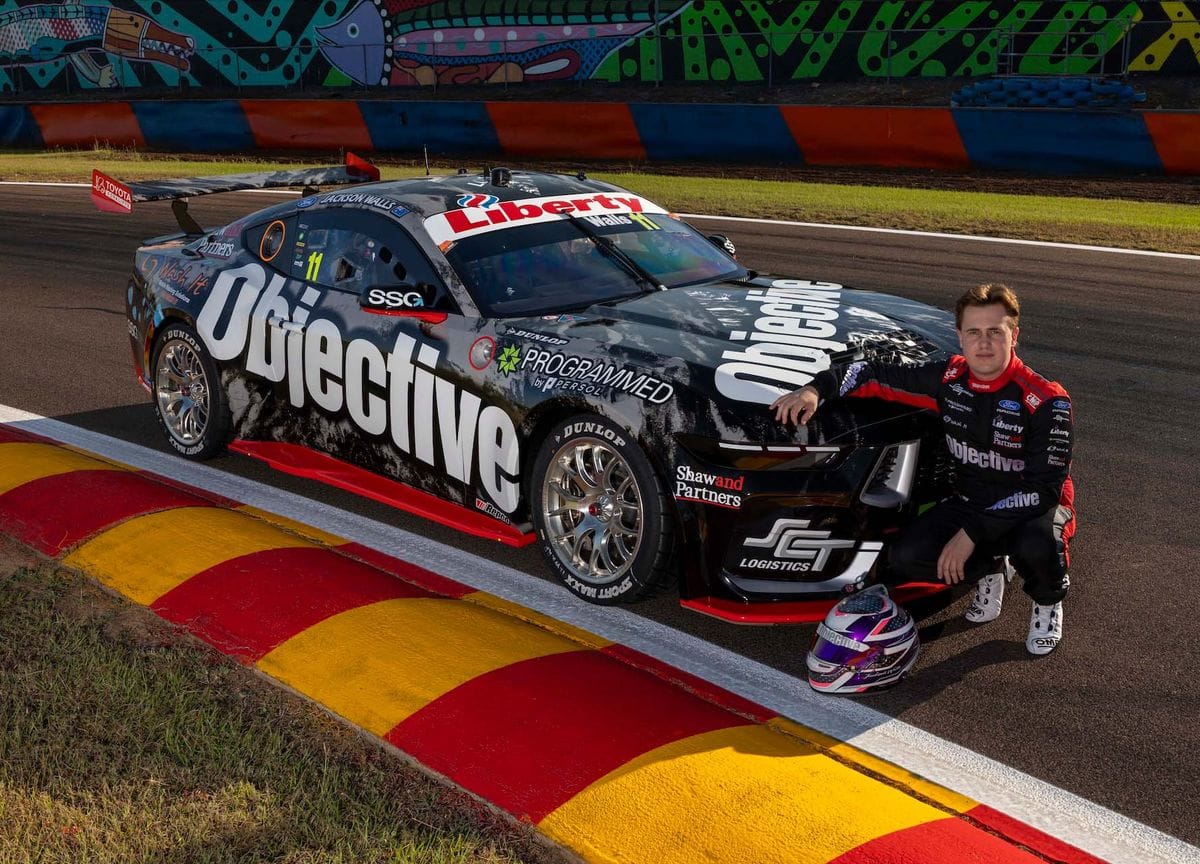
Objective Racing
driver - Jackson Walls #11, Ford Mustang GT
artist - Aidan Hartshorn
Created by Walgalu/Wiradjuri artist Aidan Hartshorn, Objective Racing’s livery design draws inspiration from the artist's ancestral lands in the high country of the Kosciuszko National Park and foothills of the Snowy Mountains
Aidan's work is deeply informed by his connection to Walgalu/Wiradjuri Country, with much of his artistic practice exploring the relationship between landscape, culture and memory. For this design, he reflects on areas of Country that now sit beneath the turbulent waters of the Snowy Hydro dams, while maintaining a strong connection to the stories, places and cultural knowledge that endure.
The artwork features distinctive prism forms inspired by traditional shield designs. Flowing patterns throughout the livery evoke the movement of turbulent water across the landscape, drawing on imagery of the waterways that have shaped both Country and community.
By combining contemporary artistic techniques with cultural symbolism, the design creates a powerful visual representation of place, resilience and connection. The result is a striking Indigenous Round livery that honours the enduring relationship between people and Country, while bringing a unique story from Australia's high country to the national motorsport stage.
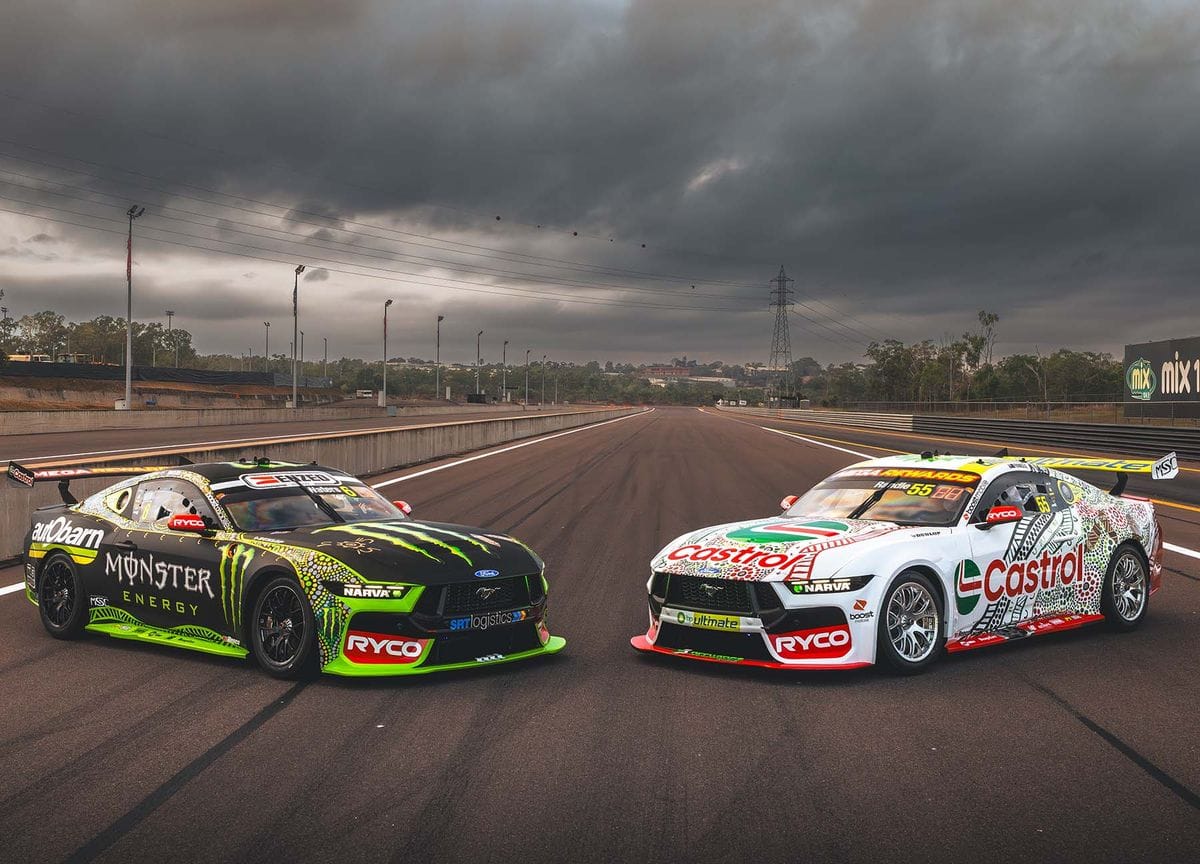
Tickford Racing
driver - Cam Waters #6 and Thomas Randle #55, Ford Mustang GT
artist - Joshua James
Cam Waters #6, Ford Mustang GT
For a second consecutive year, Tickford Racing has partnered with artist Joshua James to create its Indigenous Round liveries, with Moorditj Moort (Strong Family) telling the story of driver Cam Waters both on and off the racetrack.
Joshua is a proud Noongar Wardandi and Bibulmun man from the South West of Western Australia whose work draws on culture, storytelling and connection. Having lived and worked across Aboriginal communities throughout Western Australia and the Northern Territory, he brings a wealth of cultural knowledge and experience to his art.
Created in collaboration with Cam Waters and the Tickford Racing team, the design celebrates the people and relationships that support success. Featured throughout the artwork is the Karda, or Racehorse Goanna, symbolising speed and reflecting Cam's racing career. Two message sticks represent the connection between the driver, mechanics and wider team, highlighting the collective effort behind every race weekend.
At the heart of the design is a strong campsite surrounded by three figures representing Cam, his partner Brooke and their daughter Mila. Together, they form a moorditj moort - a strong family. The artwork serves as a tribute to the support network that sits behind one of Supercars' leading drivers, recognising that success on track is built upon strength, connection and family away from it.
Thomas Randle #55, Ford Mustang GT
Determination, ambition and the pursuit of success are central themes in Koordak Balap Dji ("Longing for his Moment"), the livery created by Joshua James for Tickford Racing driver Thomas Randle.
Now based on Gulidjan Country in Victoria, Joshua is a proud Noongar Wardandi and Bibulmun man whose artwork blends traditional storytelling with contemporary themes. His ongoing partnership with Tickford Racing has seen him create multiple Indigenous Round liveries that celebrate both culture and the unique stories of the drivers behind the wheel.
This design reflects Thomas's continued drive to achieve success in the Supercars Championship. Throughout the artwork, groups of people symbolise the strong connections he shares with family, supporters and racing fans who have been part of his journey.
At the centre of the piece are two message sticks, representing the relationship between driver, mechanics and team. The tracks of the Wetj (emu) and Yongka (kangaroo) are woven into the design, while a prominent shield symbolises strength, commitment, resilience and determination.
Together, these elements tell the story of a driver striving towards his goals, supported by those around him and driven by an unwavering desire to succeed behind the wheel of Car #55.